Investopedia is partnering with CMT Association on this newsletter. The contents of this newsletter are for informational and educational purposes only, however, and do not constitute investing advice. The guest authors, which may sell research to investors, and may trade or hold positions in securities mentioned herein do not represent the views of CMT Association or Investopedia. Please consult a financial advisor for investment recommendations and services
Crude Oil Finally Demonstrates Bullish Momentum
For most energy stocks, upside is usually limited unless crude oil is showing strength. After a strong upward push on Tuesday, the chart of crude oil has now cleared a significant resistance level as it approaches the vital 200-day moving average.
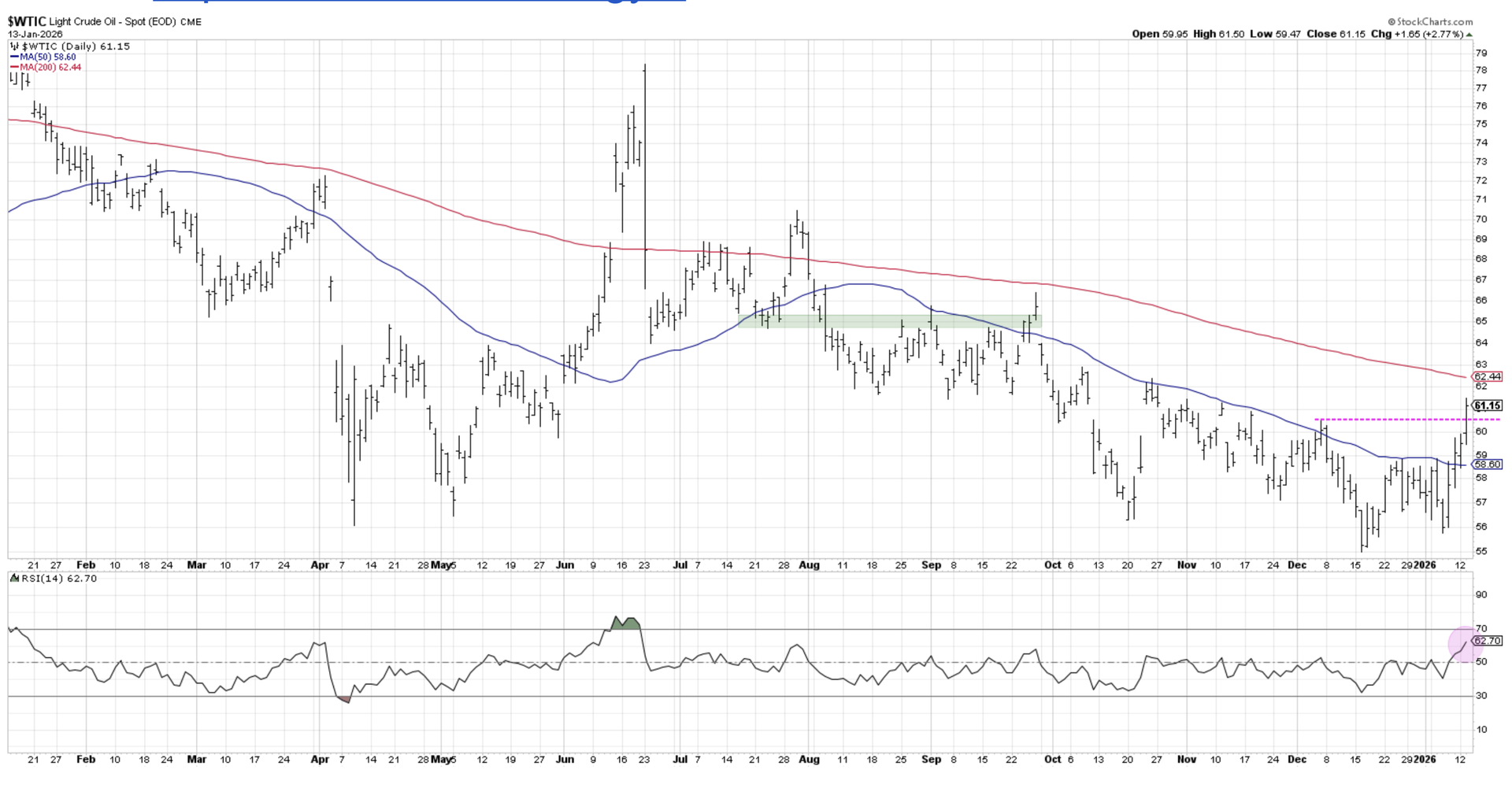
After rallying into the upper 70s in June 2025, crude oil futures broke below the 200-day moving average as a new downtrend emerged. Over the last three months, crude oil has not been able to regain the 50-day moving average, speaking to the consistency of this distribution phase.
The RSI has been consistently below 60, confirming the bearish momentum structure as crude oil eventually hit a low around $55 in mid-December. This week’s rally has pushed the RSI above 60 for the first time since June 2025. If crude oil can hold Tuesday’s breakout to a new swing high, this could lead to further upside above the 200-day moving average as a new uptrend phase begins.
Fibonacci Framework Signals Breakout for OXY
While some leading energy names like Halliburton (HAL) have been in established uptrends in recent months, I’m more intrigued by stocks in the sector that are just starting to emerge from a basing pattern. With Occidental Petroleum (OXY) driving above $44 on Tuesday, this could signal a breakout above a confluence of resistance.
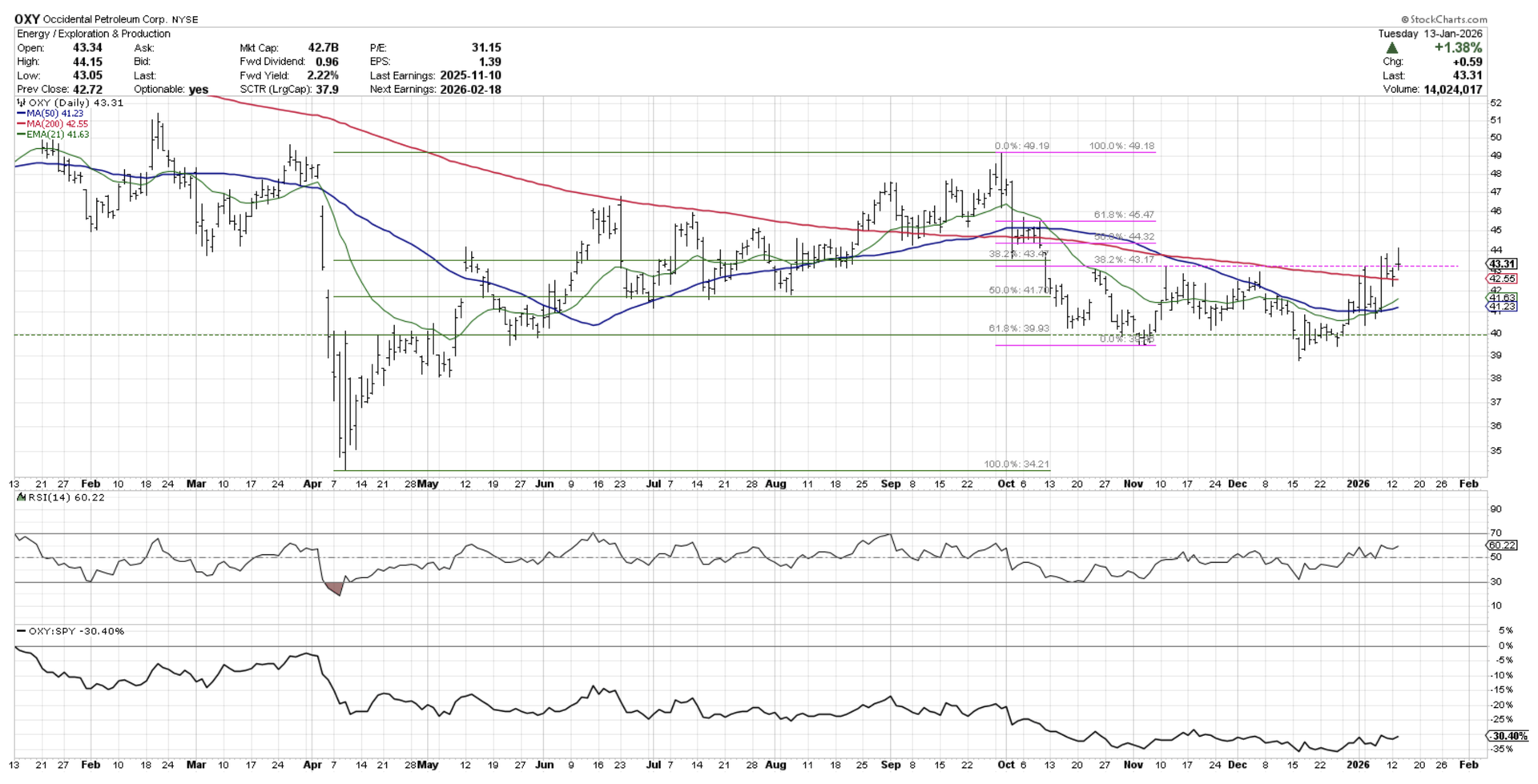
After reaching up to $49 in September 2025, OXY dropped down to a 61.8% retracement level using the April 2025 low as a starting point. After a new swing low around $39.50 in early November, the price popped back up to a 38.2% retracement level based on the October selloff.
This sort of “Fibonacci framework” can help us analyze the relationship between different price swings, and also put short-term moves into proper long-term context. Over the last three weeks, OXY has pushed above Fibonacci resistance as well as the 200-day moving average. If this diversified energy name can continue above the $44 level, that would represent a new breakout phase after a three-month sideways period.

JPM Pullback Unlocks Potential Downside Targets
Shares of J.P. Morgan Chase (JPM) dropped Tuesday after a disappointing earnings report. While the long-term trend appears strong, with a continued pattern of higher highs and higher lows, the recent pullback has brought the uptrend phase into question.
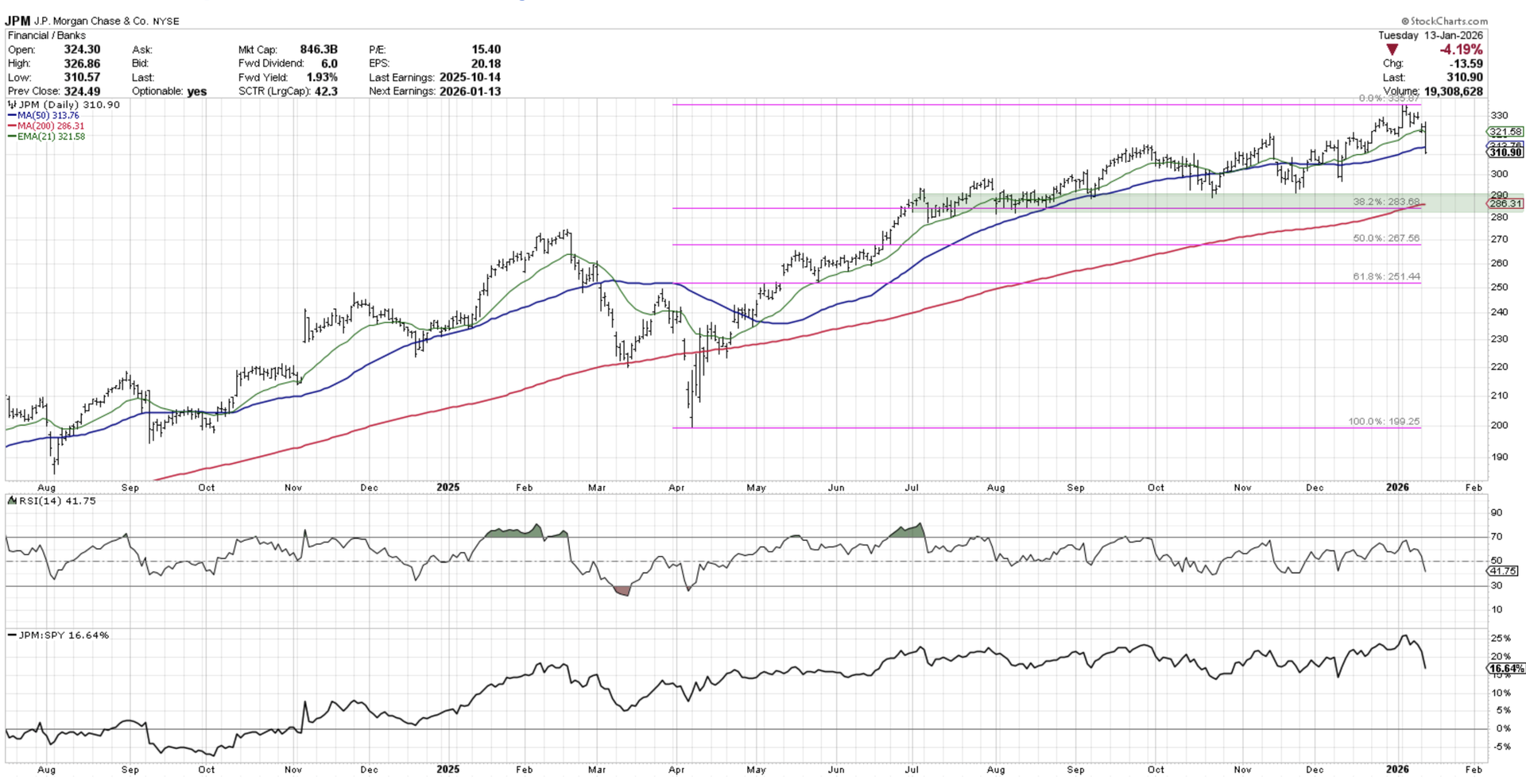
Tuesday’s post-earnings drop sent JPM back below the 50-day moving average, which often serves as a short-term trend barometer within an uptrend phase. I’m looking for potential support in the $280-290 range based on the 200-day moving average and Fibonacci support using the April 2025 low and last week’s all-time high.
The RSI has dropped down to the 40 level, similar to the October and November pullbacks. If JPM can hold $280, and the RSI can remain above this crucial 40 level, then bulls can remain confident in the sustainability of the long-term uptrend phase. However, a break below $280 on weaker momentum readings could finally confirm an end to one of the more impressive 2025 runs outside of the growth sectors.

David Keller, CMT is a past president of the CMT Association, a CNBC Contributor, and President and Chief Strategist at Sierra Alpha Research. Dave recaps market activity and interviews leading experts on his “Market Misbehavior” YouTube channel. He has served as Managing Director of Research at Fidelity Investments, Chief Market Strategist at StockCharts, and Application Specialist at Bloomberg.
Shared content and posted charts are intended to be used for informational and educational purposes only. CMT Association does not offer, and this information shall not be understood or construed as, financial advice or investment recommendations. The information provided is not a substitute for advice from an investment professional. CMT Association does not accept liability for any financial loss or damage our audience may incur.